Should We Fear Artificial Intelligence? A Christian Reflection on AI, Humanity, and the Future
Artificial Intelligence is no longer science fiction. It diagnoses diseases, recommends what we buy, monitors our cities, and may soon drive our cars. With such rapid advances, many are asking: Should we fear AI?
To answer that, we must look deeper—not only at technology, but at what it means to be human.
From Robots to Artificial Intelligence
Let’s begin with something familiar: robots.
A robot in a car factory performs specific, pre-programmed tasks. It simulates intelligence but does not possess it. There is no awareness, no consciousness—only execution of instructions.
Artificial Intelligence (AI), however, goes further.
AI systems use mathematical algorithms to sort, filter, and analyze vast databases. They “learn” (in a limited sense) by identifying patterns in images, speech, text, and data. From this, they make predictions about the future based on the past.
We encounter this daily:
- Online recommendations on Amazon
- Digital assistants like Alexa and Siri
- Medical systems that analyze X-rays with astonishing accuracy
This is called narrow AI—highly specialized, highly effective, and increasingly powerful.
But narrow AI is not the end goal.
The Rise of Artificial General Intelligence
Many researchers now pursue Artificial General Intelligence (AGI)—a system that equals or exceeds human intelligence across all domains.
This ambition fuels a broader cultural movement often called transhumanism: the belief that humans can and should transcend biological limitations using technology.
Few books have popularized this vision more than Homo Deus by Yuval Noah Harari. Harari suggests humanity is moving toward two great goals:
- Overcoming death
- Engineering happiness
His proposal? Upgrade Homo sapiens into Homo deus—humans into gods.
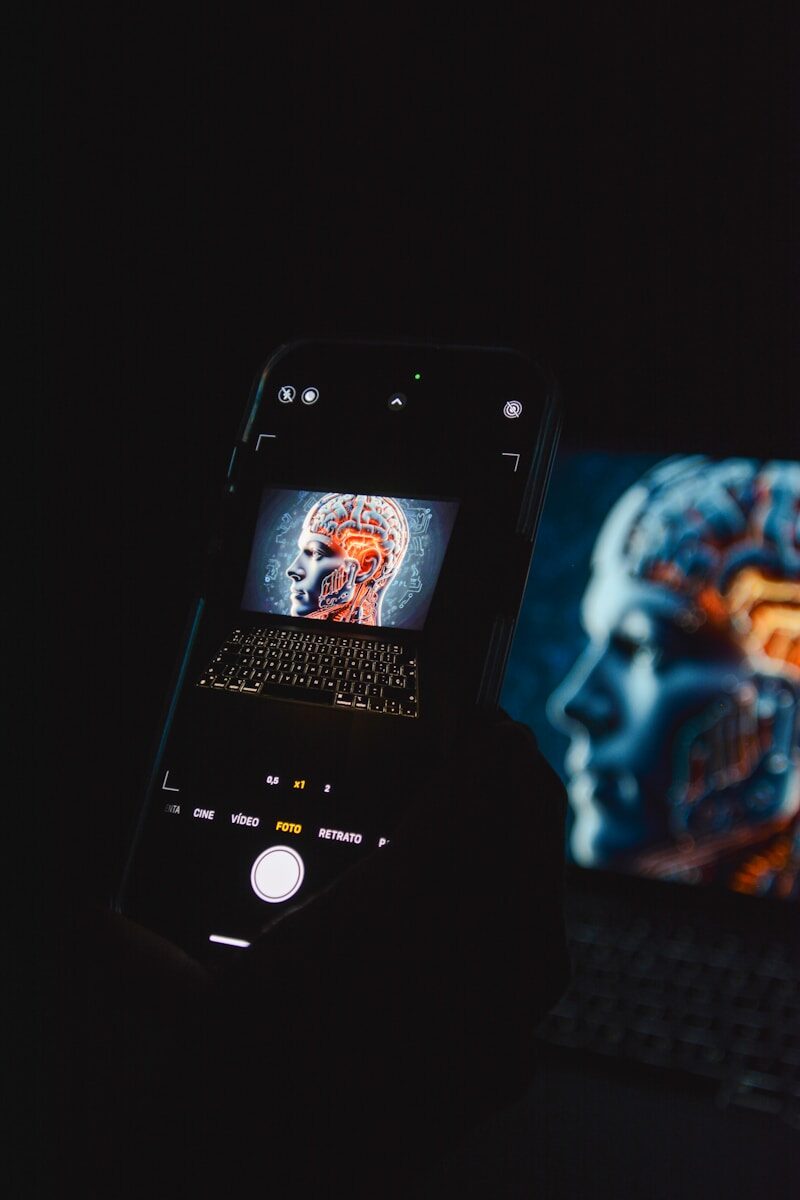

Similarly, thinkers like Ray Kurzweil foresee a “singularity,” when machines surpass human intelligence. Physicist Max Tegmark speaks of scenarios in which AI could become a planetary ruler—an all-encompassing intelligence managing society.
These ideas are not fringe. They are shaping public imagination and research agendas.
But they raise profound questions:
- What is consciousness?
- Can intelligence exist without awareness?
- What is morality?
- What is a human being?
The Consciousness Barrier
Despite decades of research, serious scholars admit: we still do not know what consciousness is.
How does a physical brain give rise to subjective awareness? How do matter and meaning meet?
AI simulates cognition. It processes data. It predicts outcomes.
But it does not experience. It is not self-aware. It does not possess conscience.
This is not a small gap. It is a chasm.
The Morality Problem
Autonomous vehicles must make ethical decisions: whom do they protect in a crash scenario? AI systems increasingly influence hiring, policing, and financial access.
But machines have no conscience.
So whose morality is programmed into them?
If morality is purely subjective—if there is no transcendent source—then ethical frameworks become expressions of preference or power.
Here the book of Genesis becomes strikingly relevant.
In the garden, there were many trees. Only one was forbidden: the tree of the knowledge of good and evil. This was not a ban on knowledge itself. It was about moral autonomy—the right to define good and evil independently of God.
Human freedom was real. The prohibition would have been meaningless otherwise.
The first morality was vertical—it was determined by God.
When humans grasped at autonomy, the result was fracture, disorder, and death.
Is it surprising that AI researchers fear the same dynamic? Many openly worry about autonomous systems that cannot be fully controlled.
The Genesis narrative reads like a pre-warning about autonomy without alignment.
Surveillance, Control, and the Beast
Modern AI enables facial recognition, social credit systems, and centralized surveillance. Nations experiment with tracking and scoring citizens. Access to goods and services can be linked to digital identity and behavioral metrics.
In light of such systems, the imagery of Book of Revelation sounds less fantastical than it once did. Revelation speaks of a power that controls buying and selling, requiring allegiance.
The number “666” is described not as a mystery code to decode a name, but as “the number of a man.”
The beast is human.
The danger is not technology itself—but humanity untethered from moral accountability to God.
Competing Worldviews: Mud or Image?
Physicist Sean Carroll describes humans as “blobs of organized mud.” That is consistent materialism.
By contrast, the biblical worldview begins: “In the beginning, God created…”
Two starting points:
- Matter is ultimate, and mind emerges from it.
- Mind is ultimate, and matter derives from it.
If humans are accidental byproducts of unguided processes, then redesigning and upgrading ourselves appears logical.
But if humans are made in the image of God, then they are not raw material for manipulation.
As ethicist Leon Kass warned: if we come to see ourselves as mere material, “meat we will become.”
The True Homo Deus
Transhumanists promise a coming Homo deus—man becoming god.
Christianity proclaims something radically different:
Not man becoming God,
but God becoming man.
“The Word became flesh.”
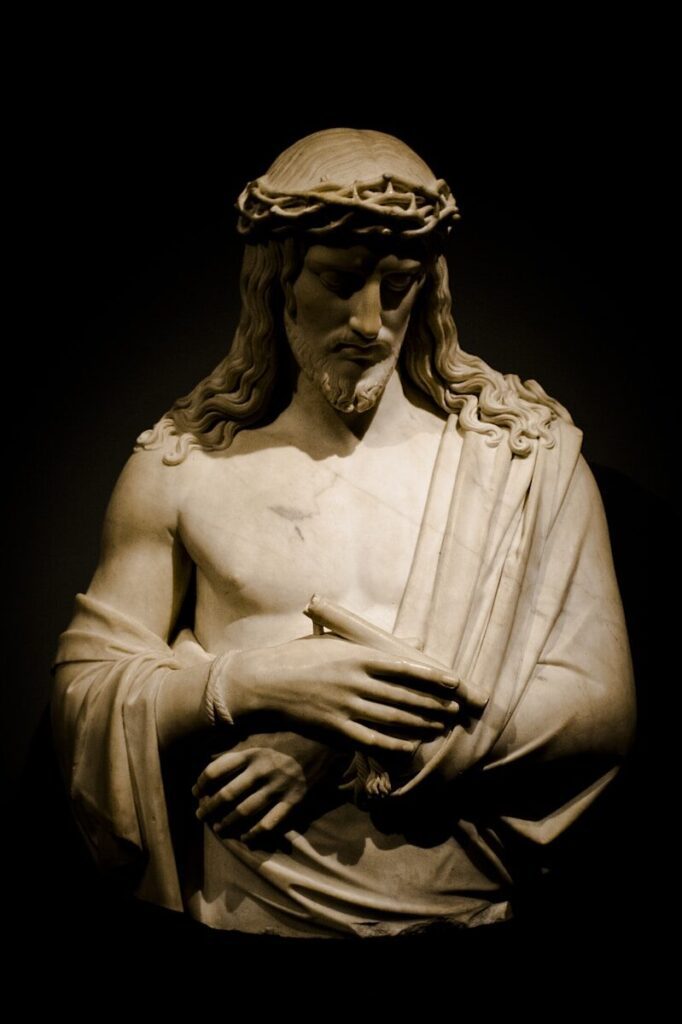
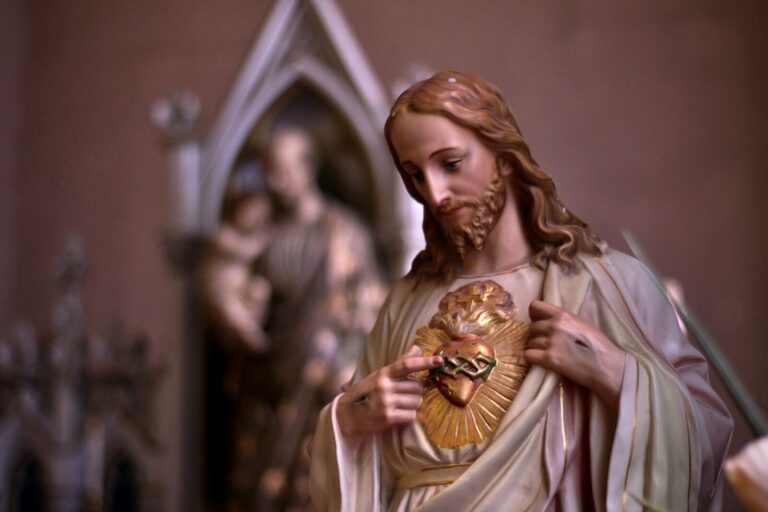
The Christian claim is that in Jesus Christ, God entered human history. This is not speculative futurism—it is a historical claim rooted in incarnation and resurrection.
There is already a Homo deus—not engineered, but incarnate.
And the promise is not technological immortality, but resurrection.
The Real Upgrade
Transhumanism seeks:
- Biological enhancement
- Digital uploading
- Physical immortality
The Christian message offers something else:
“To as many as received him, he gave the right to become children of God.”
That is phase one.
Phase two is not bioengineering but transformation:
“This mortal must put on immortality.”
The hope of Christianity is not that we will code ourselves into eternity, but that God will raise and renew us.
So—Should We Fear AI?
A balanced answer would say:
- Do not fear narrow AI.
Its medical, logistical, and educational benefits are immense. Christians should contribute to its ethical development. - Do not be naïve about AGI.
The quest for superintelligence raises real moral and spiritual risks. - Do not surrender human uniqueness.
Intelligence without consciousness is not personhood. Simulation is not soul. - Do not forget the deeper story.
The ultimate affirmation of humanity is not technological—but theological: God became human.
AI may simulate intelligence.
It cannot replicate the image of God.
And while technologists speculate about immortality, the Christian proclamation remains astonishingly bold:
The true Homo Deus has come.
He will come again.
And mortality will be swallowed up by life.
That hope is not hype. It is not algorithmic projection.
It is anchored in a Person.
- For more reflections on faith and modern life, visit our Blog.
- Learn about our mission on the About page.
- If you have questions or prayer requests, reach out through our Contact page.
- Read Genesis 1–3 on Bible Gateway: Genesis 1–3 – BibleGateway
- Learn more about Christian ethics and technology: Christian Ethics – GotQuestions